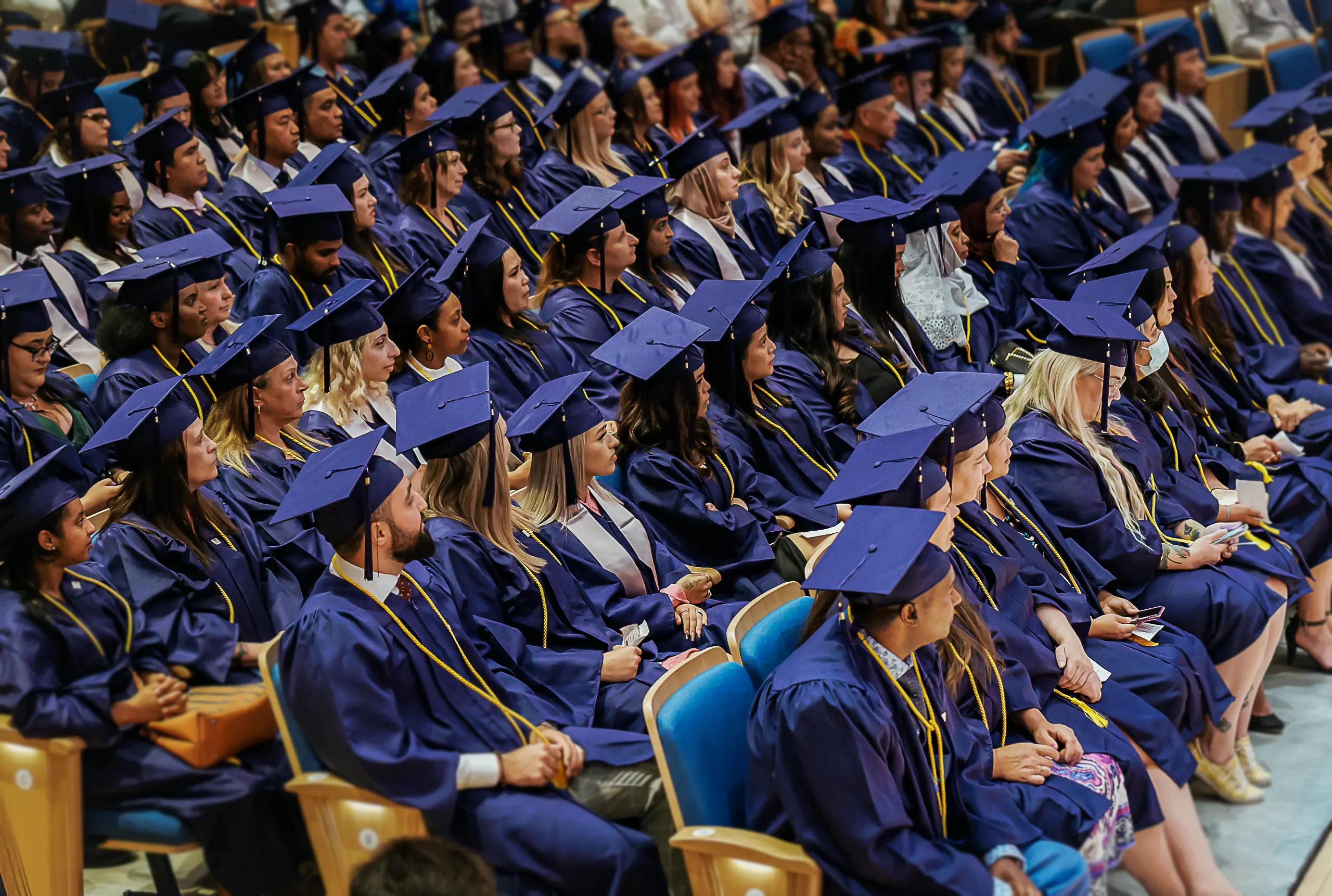

"CDI's flexible schedules and class times meant that I could go back to school while still working to support my family. I would recommend CDI to anyone wanting to change careers!" - Karry B., CDI College Graduate

Pharmacy technician jobs are rewarding and fulfilling. Canada's growing pharmacy industry demands highly trained individuals like those who have graduated from CDI College's Pharmacy Technician diploma program. This program teaches students the knowledge and skills necessary to thrive in the ever-changing pharmacy industry. Pharmacy tech students learn about compounding, computer processing, dispensing, mathematics, drug/body interactions, and drug delivery systems among other subjects. Additionally, students practice their customer service skills and learn about different pharmaceutical environments such as retail, hospital, and small business. Students will also develop real-world workplace skills like communication and customer service, which they will put to use in their mandatory practicum placements in workplaces in community pharmacies.

Graduates of this program will be eligible to apply to write the certification examination offered by the Pharmacy Technician Certification Board of Alberta (PTCB-AB) and to register with the Canadian Association of Pharmacy Technicians - Alberta (CAPT-AB), Alberta's professional association for pharmacy technicians.

This program is 49 weeks in length.

Job Opportunities
  • Community Pharmacies
  • Hospitals

Pharmacy Technician - AB

Also offered in British Columbia as Pharmacy Technician - BC At:

Burnaby

Program Courses

The program outline below is for Alberta . Click here to see the outlines for British Columbia.

Code Course Name Hours
  • ACME Advanced Computer Technology / Pharmacology 100

    • Students are introduced to the use of pharmacy software in dispensing medications and will become familiar with the various software screen shots. Students will be able to enter the required information for patient profiles and look up particular patient profiles. Students will also be able to create or update new drug files and doctor information, as well as the third party billing information. Adjudicating a prescription on-line will also be covered.
  • PAAB01 Anatomy and Physiology 45

    • This component of the program is designed to introduce students to the structures and functions of the human body. Emphasis is placed on the various effects of the disease states of the body and the manner in which pharmaceutical products affect them.
  • CESE Career and Employment Strategies 25

    • This course looks at the planning, preparation, execution, and follow-up stages of an interview. Students will learn about how people find jobs, employment expectations, transferable skills, effective telemarketing, job search management and many other helpful, career strategy topics.
  • CNPE Community Pharmacy 75

    • Students are introduced to dispensing techniques and procedures with a great deal of emphasis on the role of the pharmacy technician in relation to the role and responsibilities of the pharmacist in a retail pharmacy. Students become familiar with the fact that they must complete many of the technical duties so that the pharmacist is available primarily for patient care. The student is introduced to the prescription and all of its components and the computerized and manual system of preparation and maintenance of patient profiles, as well as completion of third party billings. The student will become skilled at how to completely fill a prescription in a laboratory setting. Pharmacy equipment and dispensing techniques will be demonstrated, explained and practiced in the lab. This course is designed to expose the student to general principles of efficient inventory management in the community pharmacy.
  • CPGE Compounding 75

    • The student will review and practice the various mixing techniques and standards of commercial compounding and learn the necessity of, and limitations to, commercial compounding. Compounding will be taught through a combination of lectures, demonstrations and practical exercises. The student will become proficient at the use of torsion and electronic balances to accurately weigh ingredients to compound.
  • PAAB04 Comprehensive Review and Final Exam 25

    • The Pharmacy Assistant program will be reviewed during this segment. Students will write a final exam in the last week of the Pharmacy Assistant program. The examination will include a practical component and a comprehensive theory exam. The practical exam includes all skills taught throughout the program. The theory exam is composed of approximately 300 comprehensive multiple-choice items.
  • FAEE First Aid / CPR Medical Emergencies 20

    • This comprehensive course includes everything covered in Emergency First Aid and CPR as well as a wide range of other first aid topics that will provide participants with advanced knowledge and skills required to prevent further injury.
  • PAAB03 Fundamentals of Pharmacology 100

    • In this course, students learn various mechanisms of drug action and will gain an understanding of pharmacokinetic processes that affect drug/body interaction, the procedure for administration of pharmacologic agents, and will be able to identify major drugs by drug class. Students will learn about drug indications, therapeutic uses, side effects, administration routes and common dosages. Students will be exposed to the work and language of the Pharmacy Assistant and the context in which the Assistant’s work is performed. Current pharmaceutical care delivery systems and drug distribution systems are introduced.
  • ISHE Institutional Pharmacy / Hospital Pharmacy 100

    • Students will learn the various types of drug distribution systems in hospitals and institutional settings and the procedure for managing drug inventory. Students will become familiar with the process of receiving drugs and record keeping, as well as the drug delivery systems that may be used in long-term care facilities. Students will be introduced to provincial formularies and central supply lists. Students will also be exposed to current literature analysis and presentation of modern concepts in drug distribution; drug information systems; application of data processing to decentralized pharmacy services; and administrative principles peculiar to an institutional pharmacy.
  • I2TE Introduction to Computers 75

    • This course covers working with the Windows operating system to manage files and folders, customize the desktop, create documents, and use the Internet for communication and research.
  • INYE Introduction to Pharmacy 45

    • Introduction to Pharmacy is designed to provide the student with an understanding of the pharmacy profession. This subject will introduce the student to the important role that they will play as a Pharmacy Technician. The student will review pharmacy history to see how pharmacies in general and their role as a technician have changed throughout the centuries. The profession of pharmacy as it is today will be examined from the context of the role of the pharmacy personnel, the structure of the various types of pharmacies that are in our society, and the laws, regulations and record keeping requirements governing the practice of pharmacy in the province.
  • MBPE Microbiology and Sterile Products 100

    • This course is designed to provide students with the basic principles of microbiology and the reasons why reducing microbial contamination in a pharmacy are necessary. Students will learn how to control microbial contamination by using both chemical and/or physical means. Students will study basic principles of infection control. Emphasis will be placed on aseptic techniques in the preparation of pharmaceutical products.
  • PCSE Pharmaceutical Calculations 100

    • This course is designed to provide students with the mathematical skills needed in the preparation of parenteral products, community and hospital compounding. This course will allow the students to become familiar with the multiple ways of expressing strengths, systems of weights, and measurements currently used in pharmacy practice.
  • PSKE Professional Skills 25

    • This course is designed to equip students with interpersonal skills identified by employers as essential for success in the professional world. Using a variety of instructional methods including case studies, group exercises and discussion, students learn and practice key communication skills.
  • SSSE Student Success Strategies 25

    • This course will introduce students to skills and concepts that will help them achieve personal, academic, and career success.
  • PR03 Work Experience 300

    • This program includes a practicum component consisting of a specified number of weeks of work at a job site. This practicum work experience is a mandatory diploma requirement and the business organization does not pay for the services of the student during the practicum.