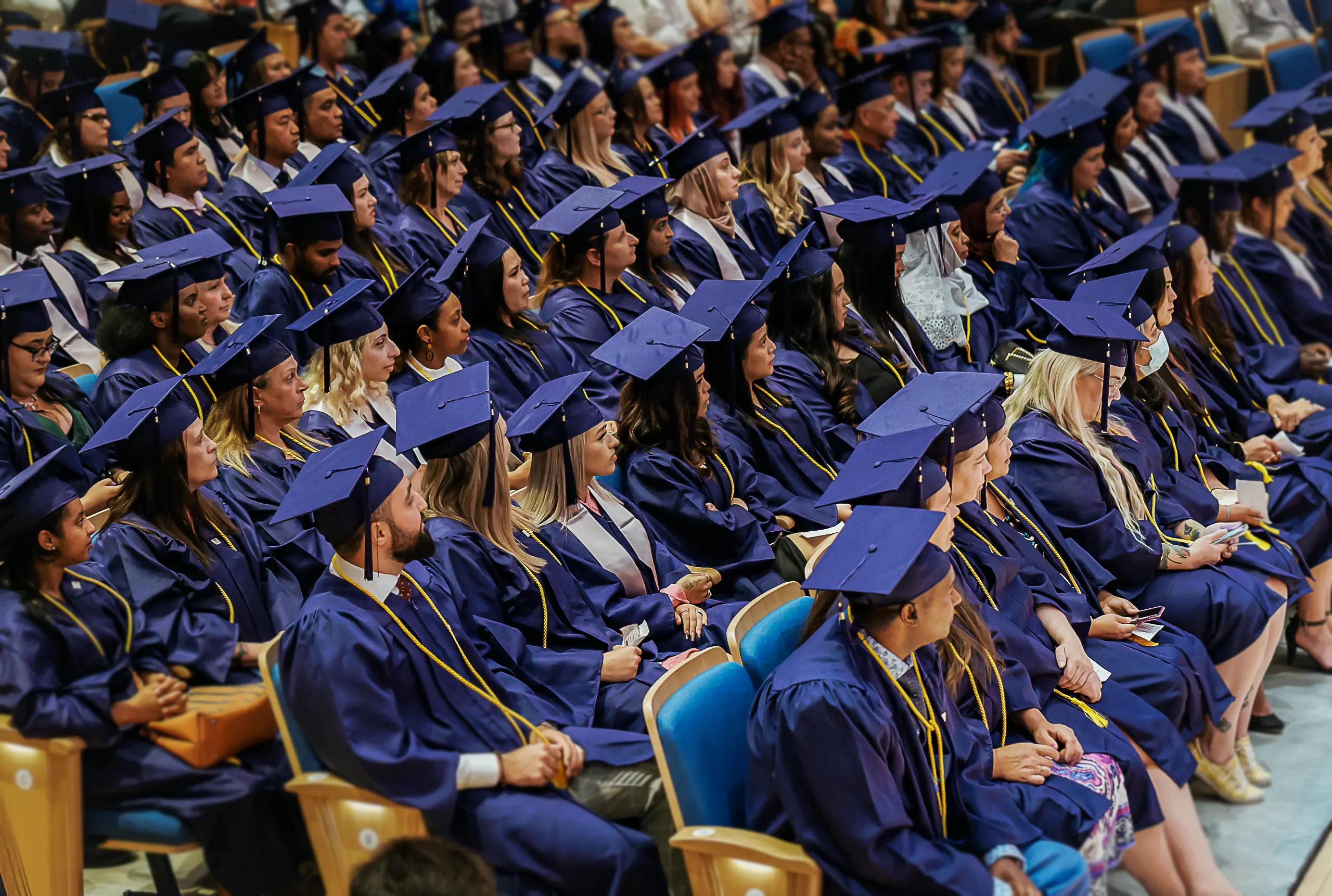

"The MOA program helped me get hands on experience and really showed me what my options were, employment-wise. I feel better about myself and my career options." - Sara D., Medical Office Assistant Graduate, CDI College

Students in the Medical Office Administrator Diploma Program develop the essential skills needed to work in a medical office environment. They learn the Microsoft Office suite and develop general business abilities and comprehensive medical office skills. In addition, students in this 36-week program gain experience with bookkeeping, payroll and accounting software.

Graduates of the Medical Office Administrator program can go on to exciting healthcare jobs like Medical Office Receptionist, Medical File Clerk, Ward Clerk, Medical Transcriptionist and many more.

This program is 36 weeks in length.

Job Opportunities
  • Medical Clinics
  • Specialists' Offices
  • Insurance Companies
  • Acute Care Ward
  • Extended Care Centre

Medical Office Administrator - Ontario

Program Courses

The program outline below is for Ontario .

Code Course Name Hours
  • ACC100 Accounting Fundamentals 4

    • Accounting helps an organization understand its business in much the same way that a model helps an architect construct a building. Accounting helps a manager understand the business as a whole (or the part for which he or she is responsible) without drowning in the details. This course will give the students an understanding of basic accounting principles and procedures, and help prepare them to work in a business environment.
  • AOE200 Advanced Office Applications 3

    • This advance level program will teach the students the necessary skills required to use Microsoft Word, Excel and Access effectively and efficiently. While building on earlier course, participants of this program will develop considerable skill through practical assignments. Students will also cover MS Publisher as part of this program. The prerequisite for this program is Intermediate Computer Applications (IOC 175) or equivalent skills in intermediate level Microsoft Office. This program will cover Microsoft Word, Microsoft Excel, Microsoft Access, and MS Publisher.
  • IOC150 Applied Computer Applications 3

    • For those who are not already proficient in MS Office software, this series of workshops will be essential to completion of some of the projects and will improve the students’ productivity in school and on the job. This workshop is optional and only needs to be taken by those who do not already have experience in the software covered. All modules are covered at the basic and intermediate levels. Students who are familiar with the software may do challenge exams and use the time for other projects. This workshop series will include MS Word (word processing), MS Excel (spreadsheets), Access (database), MS PowerPoint (presentations) and MS Outlook.
  • GES200 Gaining Employment Strategies 2

    • The Gaining Employment program will help participants develop the requisite skills to plan and conduct an effective employment search or determine their suitability for self–employment. Students will set goals and objectives, develop interview and presentation techniques, resumes, and detailed job search or self–employment plans.
  • INT200 Interpersonal Communication 2

    • Effective communication is critical to successful management. Without it, managers will find themselves running into problems with employees, customers, peers and superiors. Good communication practices will help make work go more smoothly, avoid costly errors caused by misinterpretation and reduce overall stress levels for all involved. During this module, participants will cover the communications process, barriers to communication, effective listening, non–verbal communication, dealing with emotions, questioning, paraphrasing and acknowledging, communicating in a cross–cultural environment, and giving and receiving feedback.
  • IOC100 Introduction to Computers 1

    • This course consists of a combination of modules that are considered necessary prerequisites to all other courses. During this course, students will begin with Micro Computer Terminology, which they will do in conjunction with keyboarding skills. Both of these courses are self–paced. Students will then proceed to Windows environment, which will also be self–paced, except for the review days, which are scheduled before each beginning studies on each of the integrated software suites. Students may already have some of the skills covered in this module. Those students will be assigned enhanced courses.
  • IPP200 Introduction to Payroll Processing 3

    • Course description coming soon.
  • MOP200 Medical Office Procedures and Billing (Private and OHIP) 4

    • This program will build on the general office procedures that the students have already covered and focus specifically on the differences in the medical office environment. Students will learn the importance of medical law, filing and record keeping along with the importance of confidentiality. A key component of the module will be the various types of billing. Medical Office Assistants will be required to know what services are to be billed to patients, what services are covered by OHIP and what procedures are covered by private insurance plans. Various offices will use different types of billing software and some of the billings may be done manually. While the students will learn a number of these billing procedures in class, a key learning experience will come through the co–op filed placement that students will be required to complete.
  • MTA200 Medical Terminology and Anatomy 4

    • This program for healthcare professionals will develop the students understanding of human anatomy and medical terminology. Students will learn and memorize medical terms and learn prefixes and suffixed used in the industry. Those prefixes and suffixes will help the students determine the relationship between the word and its association with parts of the body or related actions. This instinctive program will require that the students do considerable study and memorization to become fluent with the term and their origins.
  • MTP200 Medical Transcription Procedures 2

    • Many doctors dictate notes and letter for patents, patient files, other doctors and sometimes employers. Medical assistants are required to transcribe the tapes and prepare letters and documents. Medical transcribers have a challenging task as they must understand the medical terminology to transfer critical information form audio to a typed document. It is critical that terms are accurate for legal and health reasons. Students will learn to use transcribing equipment and will hone their terminology skills. They will also learn to work with doctors who have hard to understand accents.
  • PEP100 Personal Effectiveness 2

    • This foundation course will provide the students with the skills and abilities required to complete the program along with a number of skills needed to succeed in the workplace. The main areas of study in this course are time management and student success; teamwork; managing conflict; customer service; and personal accountability.
  • PMP150 Project Management Using MS Project 2

    • Course description coming soon.
  • SAC100 Simply Accounting 3

    • After completing Accounting Fundamentals and Basic Bookkeeping, students will be prepared to learn computerized accounting. Simply Accounting is one of the leading accounting software packages for small business. Students will learn to set up the software for a company, make entries and prepare reports. While previous programs provide the theory of how accounting and bookkeeping work and what they mean to a business, this software will allow students to actually enter exposes and revenue into the software and see the results.
  • SOF200 Software Integration 1

    • In this module, students will learn to integrate all of the main Microsoft Office software modules. They will learn to move information from program to program. For example, parts of a spreadsheet may be pasted into a word document and vice versa. Students will also learn some productivity tools when they learn to set up automatic updating on their documents. For example, the student may update an Access database and have the data automatically updated on the Word document that is using it. Students will also be taught to integrate information from various software packages by using the PDF writer software. This is the last of the Applied Applications modules. Students must have completed the other Microsoft Office courses to benefit from this module.
  • MAT100 Vocational Math 2

    • This introductory college course is designed to cover the basic math skills that will be necessary for later courses. It begins with a review of mathematical concepts that the students should have learned in high school and prepares them with a foundation for more advanced mathematics programs and other related courses such as accounting and technical subjects.
  • COM150 Written Communication 2

    • This module will deal mainly with report and proposal writing. The process will begin with a refresher of the student’s writing skills including the correct use of grammar. Students will learn when to best use letters, memos and e–mail messages. They will also learn to plan and prepare effective reports and proposals. During this course, students will learn to make their writing interesting, write the details, plan and write winning proposals and reports, and analyze opportunities.