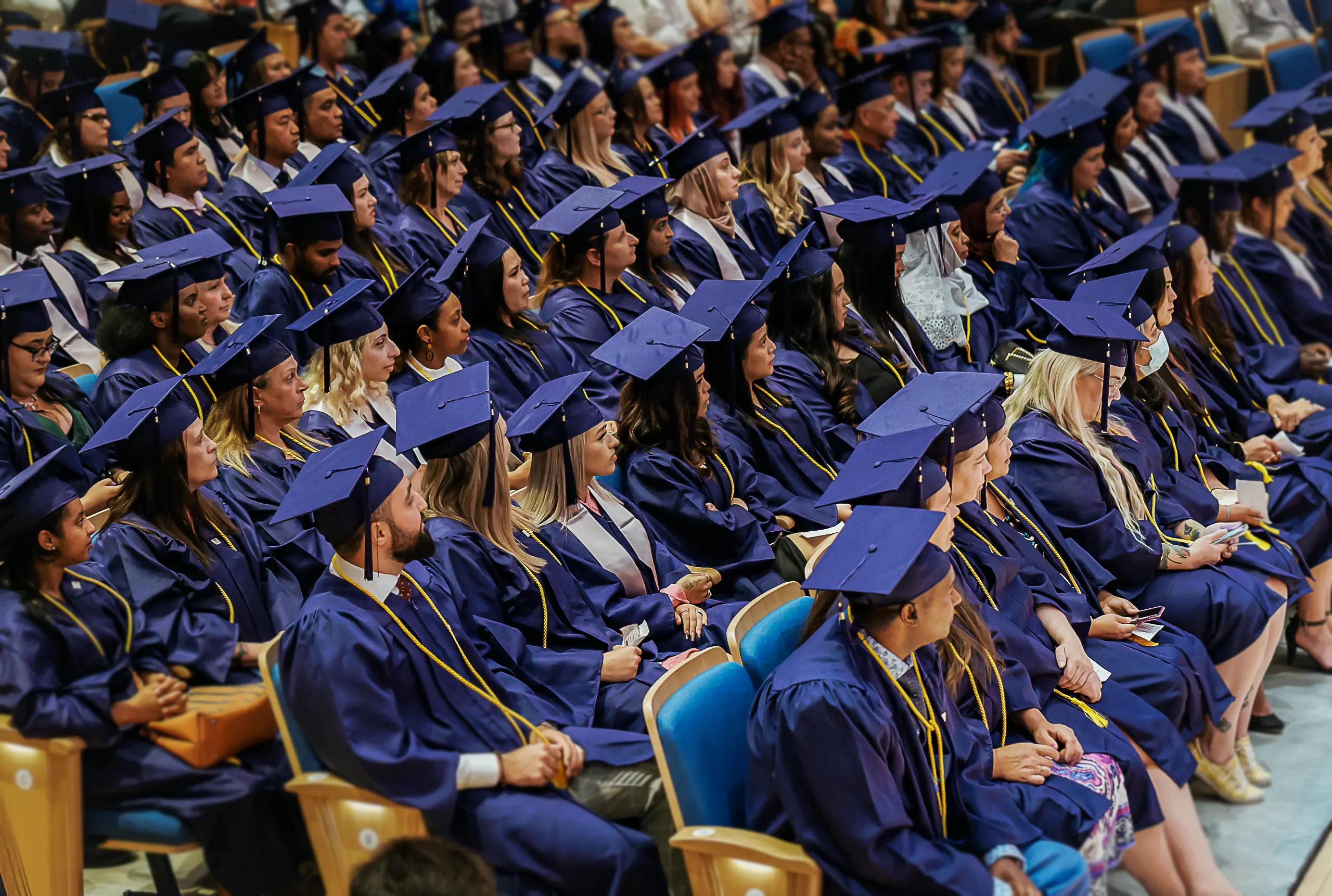
“The staff in Employment Services was very supportive and made sure that the students had the ability to produce a strong resume and to perform a thorough job search. Overall, I would recommend this college to anyone because of the high standards set by all staff.” - Patrick S. CDI College graduate

There is growing demand for skilled 3D modelers and animators for film, TV, and video game design. CDI's 3D Modeling Animation & Design program gives you a solid foundation in the artistic and technical skills you need to thrive in these competitive industries.

The program teaches key concepts like video game design programs, 3D modeling software, colour theory, life drawing, and other design fundamentals. Students will put their skills to use in the the production and animation of lighting, texturing, characters, layout and design. Graduates of this program will have built a strong portfolio that they can use to launch their careers in animation and design.

Students will be prepared to work in a variety of CGI based industries.


Prerequisites 

  • High school diploma V 
  • Successful admission test 
Graduation 
To graduate, students must obtain the required pass mark in each course. 


Job Opportunities
  • Game development companies
  • Computer animation studios
  • Special effects and post-production
  • Industrial design firms
  • Software producers

Program Courses

The program outline below is for Quebec .

Code Course Name Hours
  • 574-NCC-ID Fundamental Principles of Colour and Design 45

    • Subjects – Fundamentals of design and colour. Design terminology, line and shape. Design process. Principles of symmetry, asymmetry and balance in design. Use of shapes as elements of design. Abstract and non-objective shapes. Use of colour as element of design. Concept of space. Colour theory. How humans react to colours. Colour study: types, primary, secondary, hues, values, saturation, colour scale, cold and warm colours, complementary and contrasting colours, colour balance. Mixing colours through addition and subtraction. Colour harmony, visual impact, saturation and value of colours. Impact of media type on colours. 

  • 574-ADA-ID Anatomy – Analysis and drawing 45

    • Subjects – Fundamentals of anatomy drawing. Basic shapes used in the composition of the human body. Terminology of anatomy. Anatomy of the human hands and drawing from various angles. Anatomy of upper limbs and elbow, and drawing in various positions. Drawing of shoulders viewed from the front and back. Skeleton and muscles of the arms and shoulders. Using shadows to improve the shapes and detail. Anatomy of the human foot and drawing from various angles. Anatomy of lower limbs, and drawing in various positions. Anatomy of the knee and ankle, drawing in standing position and use of shadows to improve the shapes and detail. Anatomy of the torso and geometric shapes used for drawing. Anatomy of the abdomen and pelvis, geometric shapes and use of shadows in the drawing. Anatomy of the face, neck and head, muscles and bones, geometric shapes and use of shadows in the drawing. Principles of perspective and proportion scale. Side views. Integration of anatomy in a global drawing. Drawing muscles and the muscle system. Drawing of various poses with human model. Correcting by respecting proportions
  • 574-TRI-ID Image editing 45

    • The main objective of this course is to teach the student graphical image production. Through this ‘hands-on’ course, the student will learn the fundamentals of design, as well as advanced features and tips, to prepare images using industry standard software. The student will leverage the capabilities of the brush-based sculpting and modeling software package to create realistic looking character models with effective textures. By the end of this course, the student will be able to create and enhance sophisticated images. They will learn how to correct and modify print as well as Web images using various techniques and organizational tools. They will also learn how to apply special effects to original and composite images.

  • 574-1AN-ID Introduction to Animation 60

    • In this course, students will learn the basic principles of animation. Students will participate in several practical projects designed to illustrate the fundamental processes of animation. The course will explore the traditional techniques of animation and how they apply in the modern world of animations. The course will explore the different types of animation including stop-motion, visual effects, traditional animation... It will cover creating backgrounds, movement, action, special effects, wave, animation of complex cycles, physical properties of water and movement, interpolation techniques, poses of characters, pimple animations of characters... and more.
  • 570-DT1-ID Traditional Drawing I 45

    • Subjects – Drawing styles and techniques. Development of one’s own drawing style. Drawing of lines and basic shapes. Principles of perspective for drawing. Observation and live subject drawing. Shadowing techniques. Variation of light and its effect on the drawing of shadows. Balanced composition in a drawing. Drawing textures. Freehand drawing of various objects.

  • 574-DP1-ID Character Design 45

    • Students will learn the principles of good character design, from research to final detailing. Students will apply principles and techniques of design and anatomy to achieve the expressive, well-developed, appealing characters. Students learn to draw anatomically correct structures of the human body while observing live models. Correct anatomical proportions and accurate musculature are emphasized. Students are also introduced to shading and lighting techniques and views and perspective. By the end of this course, students should be able to work with a variety of styles, archetypes and body structures to construct their characters. 
  • 574-NM3-ID 3D Modeling Foundations 45

    • This course is an introductory level course exploring the foundations of 3D modeling. Students will learn to think in a 3D environment and design objects in 3D using the typical 3D coordinate system. In addition to learning the fundamentals of modeling, students will also learn how to use the industry standard modeling and animation software package such as Maya to produce a model. Students will learn to work with polygons, NURBS, subdivisions and deformers as well as a brief introduction to lighting and textures.
  • 574-TA3-ID 3D Animation Techniques 60

    • This course will explore the basic techniques of 3D animation. Using industry standard software, students will take their first steps to animating a basic character. Using a hands-on approach, students will learn the techniques of basic animation, texturing, visual effects and rendering. Will also be covered: animation software,  interface and tools,  the animation process, reviewing and applying principles of animation, application of stretching techniques and pressure, lattice and nonlinear transformations, incorporating notions of weight and speed in a animation, principles of direct and inverse kinematics, linear motion animation, animating a walk cycle. 
  • 574-DT2-ID Drawing II 45

    • This course is dedicated in large part to the drawing process and representation. Structures and forms, symmetry and asymmetry, character and environments design will be covered. 
  • 574-CPS-ID Character design and Story Boarding 45

    • This course introduces students to the concept of storyboarding. Students will learn how to create clear, concise storyboards. Students will explore the elements that contribute to the final production of industry standard storyboards, including everything from a 30 second commercial, a television show, computer game, and feature films. Topics will include concept and production boards, thumbnail sketches, the role of character design, character staging, model sheets, art direction, background (layout) design, and camera positioning.
  • 574-CNJ-ID Level Design 60

    • This course explores the principles and theory of level design, multiple players game, solo games... Through extensive practical activities, students will learn the steps and processes for taking an idea and designing a game level prototype. The'll learn how to use software, the different kinds of game, AI, environments and levels theories, music and audio material...
  • 574-TDT-ID Texture Mapping 45

    • In this course students will be introduced to the process of creating and working with textures as they are used in game design. Students will learn to work with the advanced functions of digital imaging software to produce textures that can then be mapped onto surfaces in subsequent steps in the modeling an animation process. The course will explore advanced image manipulation techniques and procedures which the student will apply to create various textures and materials.
  • 574-SCU-ID Sculpture 45

    • In this course, students will transfer their knowledge of anatomy and drawing of anatomical parts to a three dimensional sculpture. This course explores the history, materials, tools and techniques used in producing a sculpture and how to refine the sculpture into a finished work of art.
  • 574-CDA-ID Creating settings and accesorizes 45

    • This course explores the design and development of game environment modeling, the principles of perspective, camera angles and drawing techniques, design and backgrounds, the essential elements in a design or background scenery, colors, lights and shades, the illusion of depth, dynamic perspective and views, design and production of exterior and interior decorations, choice of textures and materials for different types of sets and props. Students will learn how to observe real world environments and then translate those observations into producing a model of the environment. Students will also learn to consider staging and environment mood into the design and modeling of the environment.
  • 574-MSD-ID Hard Surface and Organic Modeling 45

    • This course continues the coverage of modeling techniques. Students will learn to design and model hard surface objects (boxes). Students will learn to produce models using polygonal modeling and splines while working with geometric shapes. Students will also work with textures and materials to create the different types of surfaces.
  • 574-DP2-ID Character design II 45

    • This course continues the study of modeling techniques with a focus on the design and modeling of characters. Students will explore techniques of character modeling and how to take a character project from idea to final model. Students will design and model individual parts of the character anatomy culminating in the building of a complete character in movement.  Also includes outfits.
  • 574-LSM-ID Maya Scripting 45

    • This course introduces the student to 3D scripting using Maya Embedded Language or MEL scripting. Students will learn the various features and functions of the language that will add advanced capabilities to the animations. Students will learn how to use the MEL scripting language and its capabilities to streamline and automate the character rigging process. The course will then explore the use of MEL scripting to create a character animation. SDK Maya.
  • 574-MEJ-ID Gaming Environment Modeling 45

    • During this course, students will cover the principles of design and modeling, the fundamentals of modeling gaming environments, the illusion of depth, the use of a technique called "matte painting", techniques for creating atmosphere, organizing plans and backgrounds, the perspective and the concept of scale, methods of application of textures. Impact of camera angles on the gaming environments and special effects.
  • 574-MDP-ID Character Modeling 60

    • This course focuses on the drawing of human form in various poses that imply movement or motion. This course focuses on drawing the relationships between the body parts and the environment which surrounds them. Students will study and draw these relationships between anatomy background and foreground elements. The course will also explore the drawing of simple motion, facial expressions and gestures from both a human and an animal perspective.
  • 574-MEE-ID Lighting and Texture 45

    • This course builds upon the previously covered topics of lighting and textures. It takes the students beyond the basic light sources and shadows and explores lighting and texturing as an art. Students will learn advanced lighting and texturing skills and techniques and how to apply them to modeling and animation projects. Students will learn to select the appropriate light type for a particular situation as well as the correct material 2D and 3D textures.
  • 574-TML-ID Low Polygon Modeling 45

    • This course continues the study of modeling techniques. The focus of this course is the exploration of modeling techniques using a low polygon count and the effective use of this technique. Students will learn to identify situations where a low poly count is appropriate versus situations where a higher count is required. Students will then apply modeling techniques using a low polygon count to model characters and objects in an appropriate level of detail.
  • 574-RPD-ID Characters and Scenery 45

    • During this course, students will be introduced to the rendering software, the art of lighting and light, the different types of lighting, lighting one, two and three points, creating shadows on a 3D model, applying materials and textures, improveing textures using UV spaces and mappings, the preparation and organization of rendering, the image formats, the rendering resolution, the ompression parameters, the types of antialiasing and checking the quality of images.
  • 574-ARR-ID 3D Character Rigging 60

    • This course explores the process of preparing the setup of a character model for future animation of the character. The course will take the students through the steps of character modeling and animation with a focus on the rigging of the characters. Students will learn how to prepare and setup character rigs, bind structures to geometry and work with meshes and armature. Students will learn to rig facial expressions and lip movement as well as rigging and animating armature.
  • 574-TET-ID Material and Lighting Techniques 45

    • This course covers the importance of materials, textures and lighting as an integral component in the process of creating an effective look and feel to an object or character. This course explores the fundamental use of lighting texture, and material strategies and how they can add to the effectiveness and realistic appearance of game assets. Students will learn to identify and select appropriate materials and textures based on the type and mood of a game or scene. This course includes:  mapping bitmap textures, procedural texture mapping, acquisition of a model to apply textures, positioning of cameras and lighting and impact on the final product, principles of cinematography, natural textures and UVW mapping techniques, organic textures and UVW mapping techniques, textures accessories on UVW mapping techniques...
  • 574-P01-ID Portfolio I 45

    • This course is aimed at preparing the students’ transition to the professional world. The focus of this course is to prepare students for job interviews by helping them compile and defend a first draft of their portfolio. The portfolio will contain a 3D animation produced by the student that demonstrates his/hers skills in conceptualization, design, modeling and animation. This will be the first step in assisting students to identify a preferred skill set and to select distinguishing portfolio pieces that showcase this skill. This will then provide them with a focus for polishing their technique and developing a unique style. 
  • 574-EDN-ID Image Processing 45

    • Subjects – Introduction to the image editing software Final Cut Prop and its configuration and environment. The following aspects will be covered: revisions of production of sketches and storyboards, sequential development of history, import digital files, canvas, timeline and other editing tools, the creation of appropriate sequences, image capture, transition effects, application of special effects, layers,adding sound and audio frames and preparation of the final output of the publishing project.

  • 574-ETA-ID Advanced Lighting and Texturing 45

    • In this course, students will explore advanced lighting and texturing strategies. Students will learn different methods and techniques to use the full potential of lighting, shading, and textures to increase the detail of an object and enhance its realistic appearance. The course will also look at ways of increasing the detail of the render without necessarily increasing the complexity nor the load on resources. The course will explore the blending of colors, the automation of a scene with the various sampler nodes and utilities, maps and sliders global illumination and final rendering, maya mental ray and renderman tools. 
  • 574-A3A-ID Advanced 3D Animation 60

    • This course covers the advanced topics in 3D animation. Students will learn to produce real-time 3D animations and work with camera angles and lighting techniques to produce complex animations and effects. Students will learn to distinguish between camera movement and character movement in an animation. Students will be required to apply previously acquired skills in design, modeling, rigging and animation to produce an animation from design to final rendering.
  • 574-P02-ID Portfolio II 90

    • This course is aimed at preparing the students’ transition to the professional world, allowing the student to place the final polishing touches on their portfolio work. All portfolio components should demonstrate the student’s mastery of the programs core competencies while highlighting the uniqueness of their work. Selected pieces should reflect a standard of quality evidenced by additional time spent polishing applied skills. Students will be required to complete their presentation website and marketing collateral.
  • 574-S1T-ID Internship 270

    • Students will learn the importance of preparing themselves properly for the job search process and how to prepare and present the proper marketing collateral (resume and cover letter). In this course the student will learn the techniques that will help them to properly market themselves to potential employers (submission of a portfolio) and follow up after interviews.